
'/%3e%3cdefs%3e%3clinearGradient%20id='prefix__paint0_linear_4737_37157'%20x1='3.018'%20y1='23.6'%20x2='44.925'%20y2='24.977'%20gradientUnits='userSpaceOnUse'%3e%3cstop%20stop-color='%231CB7FF'/%3e%3cstop%20offset='.502'%20stop-color='%232FF58B'/%3e%3c/linearGradient%3e%3c/defs%3e%3c/svg%3e)


How Ipswich Town and Norwich City's home attendances compare so far
Sep 25 2026 09:20 · By onefootball.com · 37 Reads


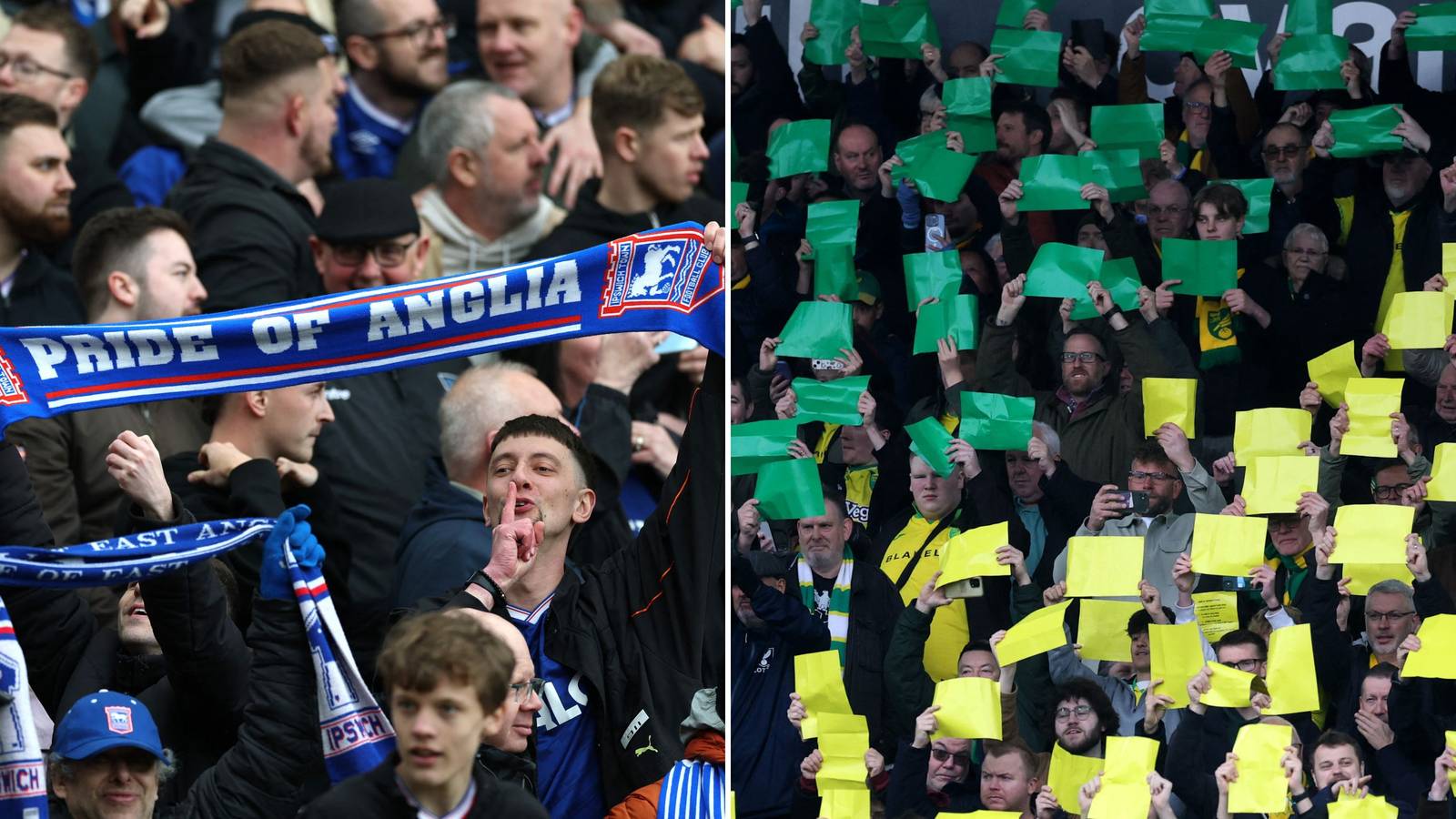
The East Anglian rivals were in the same division last season, but here's how their crowds compare now that Ipswich are back in the Premier League.
Norwich City and Ipswich Town's local rivalry has been disrupted by Ipswich's return to the Premier League at the end of last season, but here are the crowds that the two clubs have been attracting so far in 2026-27.
With 45 miles between them, the rivalry between Norwich City and Ipswich Town is far from the closest in English football, but that doesn't mean that it can be as intense as any other. A 2008 report listed the East Anglian derby as the second fiercest in England, with only the Black Country rivalry between Wolverhampton Wanderers and West Bromwich Albion above it.
Last season, following Ipswich's relegation from the Premier League, both clubs were back in the Championship, with Ipswich winning 3-1 at Portman Road at the start of October and 2-0 at Carrow Road in April as they closed in on promotion. But Ipswich's return to the top flight at the end of the season has put the East Anglian derby on ice for a year, unless the clubs should be drawn to play each other in a cup match.
Ipswich hold a narrow lead over Norwich in the attendance tables
Action Images
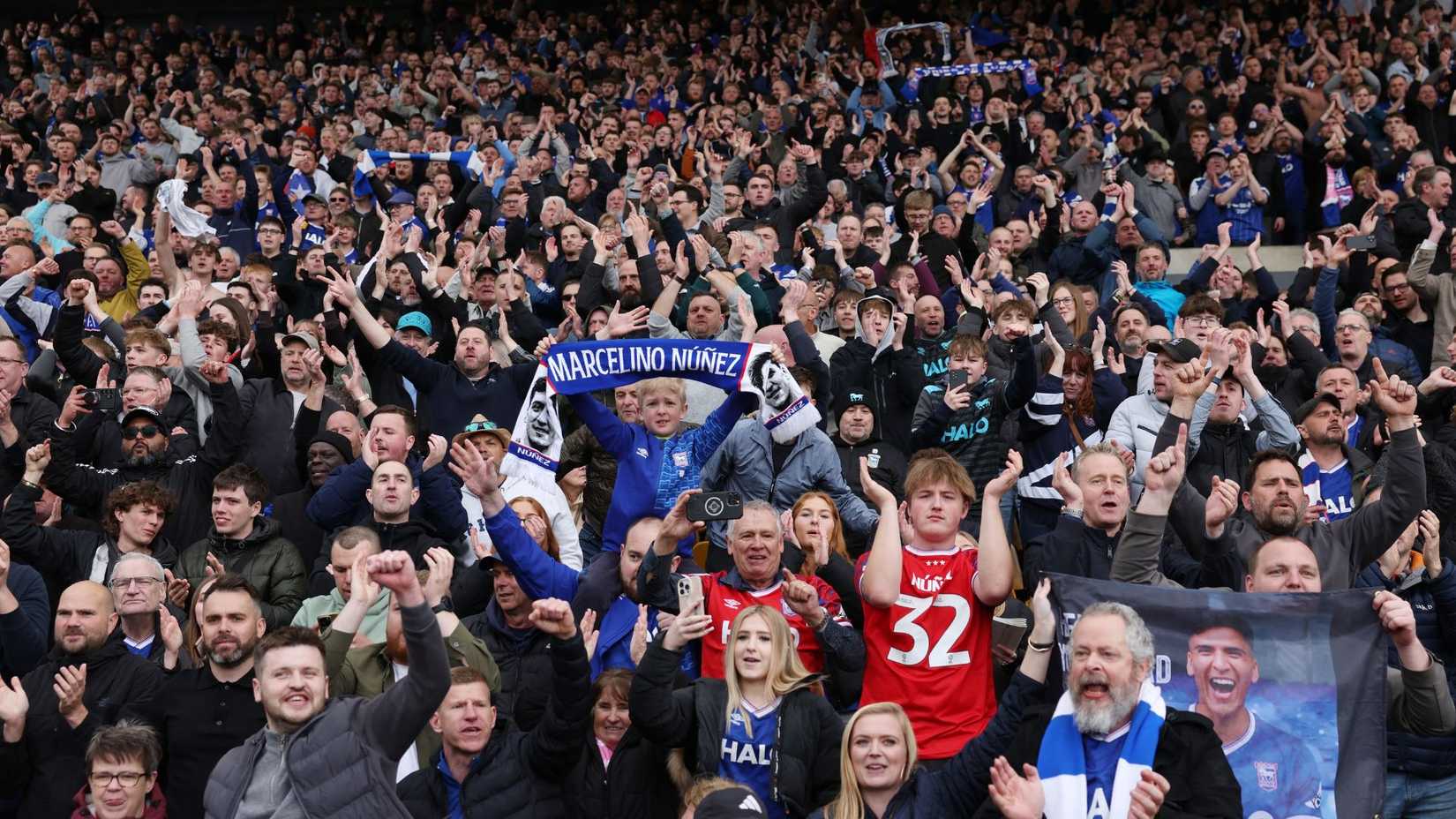
Ipswich Town's promotion to the Premier League at the end of 2025-26 has had an effect on attendances at Portman Road so far this season. The average for their two matches played so far, against Sunderland and Liverpool, have drawn an average crowd of 29,844.
Norwich City, meanwhile, remain in the Championship, and their average attendance for the four matches they've played at Carrow Road this season against West Bromwich Albion, Burnley, Birmingham City and Bolton Wanderers has been 26,030.
Both clubs have been close to capacity for the matches they've played so far. Portman Road has been 99.3% full for Ipswich's two matches, while Carrow Road has been 95.5% full.
The increase in crowds at Portman Road this season can partly be ascribed to success on the pitch. Last season, when the two clubs were in the same division, the numbers were closer, with Ipswich averaging 28,303 (94.2% of capacity) while Norwich's was 25,886 (95% of capacity).
Norwich and Ipswich don't just represent their home towns; they playing for their entire counties
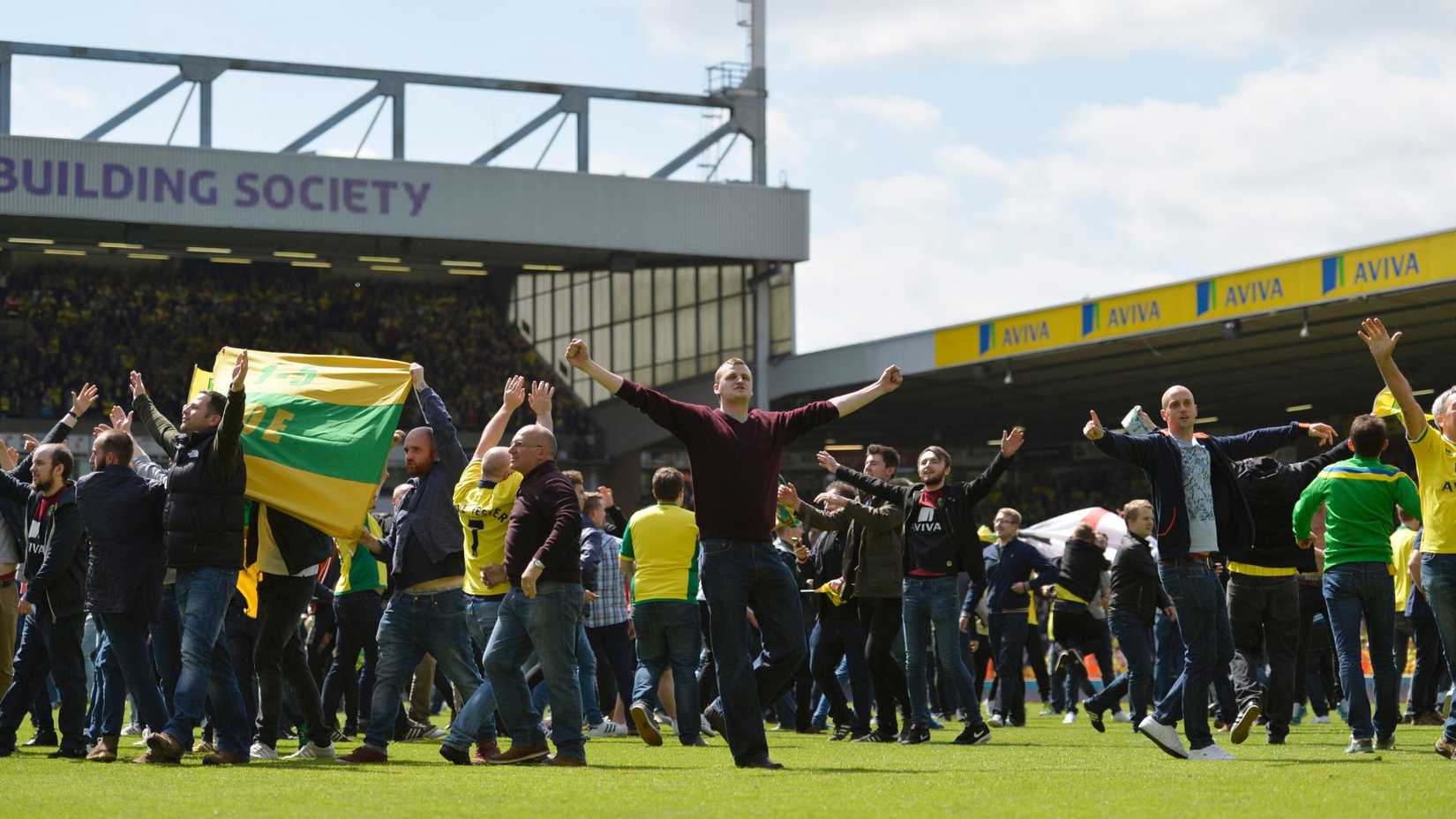
Norwich City were elected into the Football League in 1920 and Ipswich Town followed them in 1936. The two clubs have met 111 times in competitive matches, and the numbers are extremely tight. Overall, Ipswich lead with 45 wins to 43, but Norwich won the only play-off meeting between the two teams.
In 2014-15, Norwich finished in third place in the Championship while Ipswich finished sixth, meaning that the two sides faced each other in the play-off semi-finals. The two sides drew the first leg at Portman Road 1-1, but Norwich won the second leg 3-1 at Carrow Road to book a place at Wembley, where early goals from Cameron Jerome and Nathan Redmond sealed a 2-0 win against Middlesbrough and promotion to the Premier League.
But why is this derby, which takes place in a part of the country which is not a traditional hotbed, so intense? Author Rob Hadgraft, who wrote a history of the match called The Old Farm, thinks he knows the answer. Speaking to the BBC ahead of a clash between the two teams in 2017, he explained that it's partly because Norwich and Ipswich represent their entire counties rather than just their home towns.
He told the BBC's Richard Haugh: "I think it's because each club represents the entire county ... There's only one club in Norfolk, and the same goes for Suffolk ... The people live up to 40 miles apart, so they don't mingle and have pals who support the other lot ... you've got two sets of fans who never really mingle or mix, and there's no proper friendships. They really do despise each other."
While both clubs have had periods in the ascendency, these are two clubs which, as can be seen from the attendance figures, are of a very similar size, and both have had reasons to claim local bragging rights over the years. Ipswich became the first of the two to lift a major trophy, when they shocked football by winning the 1961-62 Football League Championship, and have since won the FA Cup in 1978 and the UEFA Cup in 1981, while Norwich won the League Cup in 1972 and 1985.
While the two clubs are separated by a division at present, they've both tended to gravitate back towards each other in the same division. Ipswich have had a reasonable start to their Premier League return with two wins from their first five matches leaving them in 11th place in the table heading into the international break, while Norwich are currently in 17th place in the Championship, with three wins from eight.
But with plenty of the season yet to play, there's still plenty of time for these two old rivals to be back in the same division next season again next season. Supporters of both clubs would surely both prefer it if this reunion took place in the Premier League rather than the EFL Championship.