
'/%3e%3cdefs%3e%3clinearGradient%20id='prefix__paint0_linear_4737_37157'%20x1='3.018'%20y1='23.6'%20x2='44.925'%20y2='24.977'%20gradientUnits='userSpaceOnUse'%3e%3cstop%20stop-color='%231CB7FF'/%3e%3cstop%20offset='.502'%20stop-color='%232FF58B'/%3e%3c/linearGradient%3e%3c/defs%3e%3c/svg%3e)


What is ‘Project Longbow’? The key findings of the Premier League’s investigation into Manchester City
Sep 29 2026 19:47 · By onefootball.com · 4 Reads


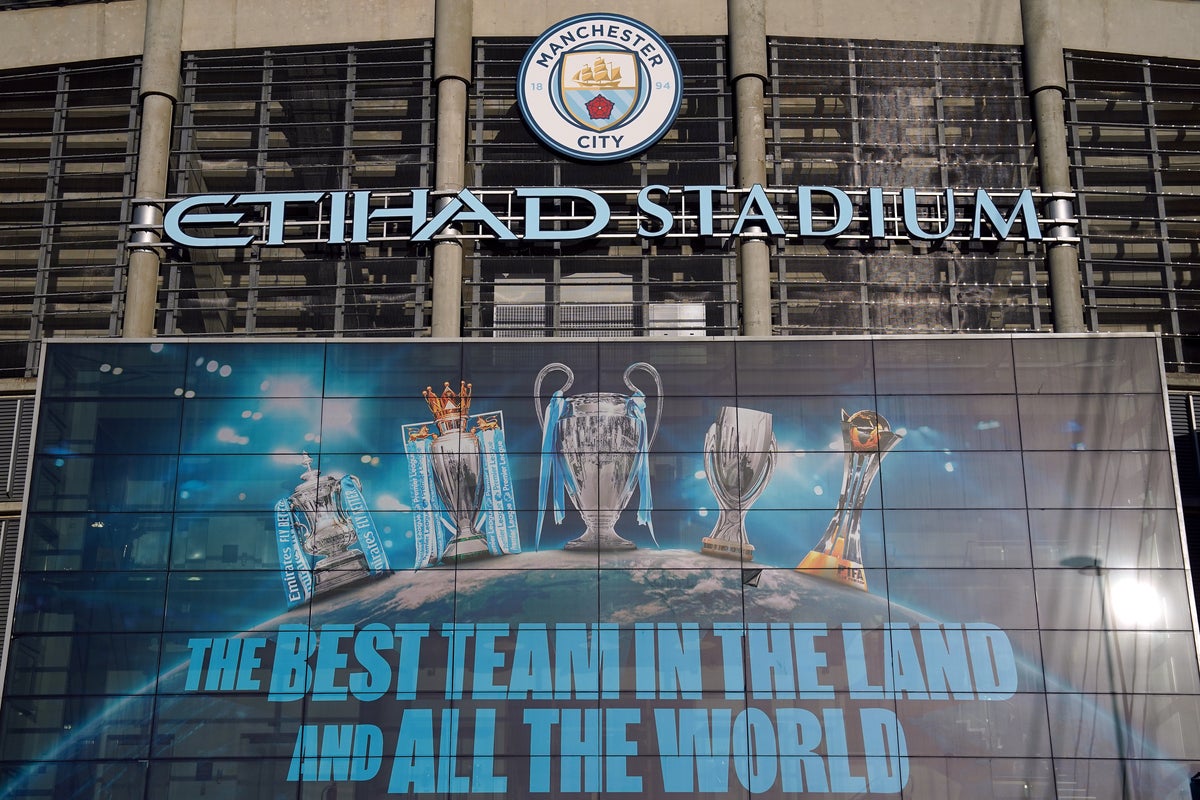
Manchester City overstated their income by £830m using a system they called ‘Project Longbow’, the independent commission into the club’s charges of financial breaches found.
The Premier League confirmed on Tuesday that City have been found guilty of all charges related to breaches of its financial rules between 2009-10 and 2017-18.
In a damning 40-page document, the Premier League said it regarded City’s conduct as having “extremely serious, significant, sustained and intentional or reckless breaches of rules critical to the proper and fair operation of the Premier League’s league competition”.
The document has detailed the scale of what the commission repeatedly called “sham” commercial deals the club made with a number of its sponsors.
They were part of a disguised funding scheme, whereby those companies were only required to pay a portion of the relevant sponsorship fees.
According to the commission, one company, “Fordham”, was “in reality little more than a front” for the Abu Dhabi United Group Investment and Development Ltd (ADUG), which owned the club, to plough in more funds.
The commission said: “In 2012 the club launched what it termed Project Longbow.
“We accept the club’s explanation that Project Longbow was a multi-strand project whose purpose was to explore how the club might boost its revenues and reduce its operating losses.
“Many of the strands of Project Longbow were genuine, legitimate attempts to achieve those aims. One was not. That was the Fordham Arrangement.”
The Fordham Arrangement was, the commision contended, “a further device by which ADUG funds could be paid into the club in a manner that concealed their true origin” and which enabled “the club to remove operating expenses from its financial statements”.
The hearing garnered factual evidence from 27 witnesses over 42 days in the last quarter of 2024, with a core bundle of key documents running to “many tens of thousands of pages”
The commission added: “The club’s financial statements for the seasons between 2009-10 and 2017-18 did not show a true and fair view of the club’s financial position.
“The club’s income across those years was consequently hugely overstated by over £830m.
“It has taken us much longer than we would have wished, and much longer than we had anticipated would be the case when the hearing concluded, to produce our decision.”